Quick Summary:
- Friendship skills often need direct teaching for many autistic children.
- ABA social skills groups and in-home practice work together to build lasting connections.
- Calla ABA supports in-home ABA sessions that build play and social skills from the ground up.

Watching your child struggle to make friends brings a special kind of worry. You see other kids pair up at recess or chat easily during playdates, while your child stands on the edge, unsure how to join in.
This struggle is common among autistic children, and it’s one families across North Carolina often bring to us. At Calla ABA, we help children build the skills needed for real friendships, one step at a time. This guide walks through why social skills need direct teaching for some kids, and how ABA social skills autism support builds lasting connection.
Why Making Friends Feels Hard For Some Autistic Children
Making friends autism therapy conversations often start with a simple truth. Many social skills that come naturally to other children need to be taught step by step for an autistic child.
Common challenges include:
- Reading social cues: Facial expressions, tone of voice, and body language can feel confusing or hard to interpret.
- Starting conversations: Knowing how and when to approach a peer takes practice for many kids.
- Understanding turn-taking: Games and conversations both rely on back-and-forth exchange, which doesn’t always come easily.
- Managing sensory input during play: Loud, chaotic environments like a playground can feel overwhelming, making social engagement harder.
- Interpreting unwritten social rules: Many social expectations go unspoken, which leaves some children guessing at what’s expected.
None of these challenges reflect a lack of interest in friendship. Most children want connection. They just need support building the skills to get there.

How ABA Supports Social Communication
Autism social development in NC through ABA focuses on breaking social skills into smaller, teachable pieces. Instead of expecting a child to know how to join a game or start a conversation, our therapists teach each step directly.
Social communication ABA North Carolina strategies often include:
- Teaching specific phrases to start or join a conversation
- Practicing turn-taking through structured games
- Role-playing common social situations before they happen in real life
- Using visual supports to explain unwritten social rules
- Reinforcing successful peer interactions as they happen
This structured approach gives children the tools they need, then builds confidence as those tools get used successfully.
What A Social Skills Group ABA NC Session Looks Like
Group sessions offer a chance to practice skills with peers in a supported setting. A typical session might include:
- A structured game that requires turn-taking and communication
- Guided practice starting a conversation with a peer
- Feedback and reinforcement from a trained therapist
- Time for unstructured play, with support available if needed
These sessions give children a safe space to try new skills without the pressure of a real playground. Mistakes become learning moments instead of embarrassing setbacks.

How In-Home ABA Builds Play And Social Skills
Not every social skill needs to start in a group setting. In-home ABA therapy plays a big role in building the foundation for play skills that ABA therapy addresses later in group or peer settings.
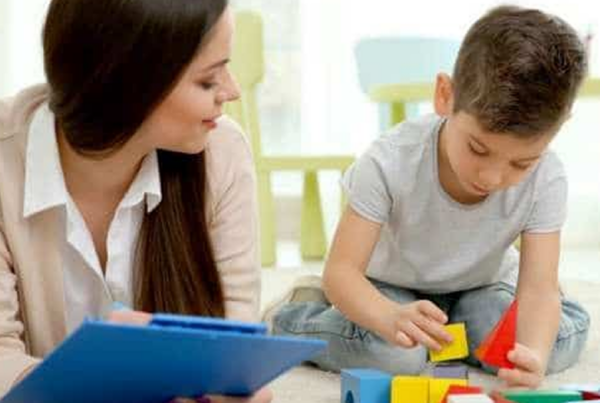
Here’s an example of how this looks in practice. A therapist working with a child at home might start with simple parallel play, where the child and therapist play near each other with similar toys, without direct interaction required yet. Over time, the therapist introduces small interactive moments, like passing a toy or taking turns stacking blocks. This slowly builds toward the child requesting a turn, then eventually initiating play with the therapist directly.
These same skills often transfer to interactions with siblings at home, and later to peers at school or in the community.
Benefits of building social skills through in-home ABA include:
- A comfortable, familiar setting that reduces anxiety during skill-building
- One-on-one attention that allows a therapist to move at your child’s exact pace
- Practice with siblings, which mirrors peer interaction in a lower-pressure setting
- Direct coaching for parents, so strategies continue outside of sessions
- A strong foundation of play skills before introducing group or peer settings
Our parent and caregiver training services help families carry these same strategies into daily life, so practice doesn’t stop when a session ends.
How Skills Carry Over Between Home And Group Settings
Social skills built at home don’t always transfer automatically to a group or school setting. Our team works to bridge that gap intentionally.
| Skill Practiced At Home | How It Shows Up In Peer Settings |
| Taking turns with a therapist during play | Sharing toys or taking turns during a group game |
| Requesting a turn using words | Asking a peer to join in during recess |
| Parallel play with a sibling | Playing near classmates before joining their activity |
| Following a simple back-and-forth exchange | Holding a short conversation with a peer |
This kind of connected practice helps children apply what they’ve learned in a setting that matters most to them, whether that’s a classroom, a playground, or a friend’s house.

ABA Peer Interaction: Why Practice With Others Matters
While one-on-one therapy builds a strong foundation, practicing with actual peers gives children the chance to apply their skills in real situations. ABA peer interaction sessions might include structured playdates, small group activities, or supervised time on a playground.
Our team watches closely during these interactions, stepping in with support when needed and stepping back when a child shows readiness to navigate a moment independently. This balance helps children build genuine confidence, not just rehearsed responses.
A Quick Reference For Parents
| Challenge | ABA Strategy |
| Trouble starting conversations | Teaching specific phrases and practicing them repeatedly |
| Difficulty with turn-taking | Structured games that require back-and-forth exchange |
| Overwhelmed in loud or busy settings | Gradual exposure paired with sensory supports |
| Trouble reading social cues | Role-playing and visual supports explaining common cues |
| Anxiety around joining group play | Starting with parallel play before direct interaction |
Keep this table handy if your child struggles with a specific part of social interaction. It offers a quick way to match the challenge with a strategy that fits.
How Calla ABA Supports Social Growth Across North Carolina
Our team builds individualized plans for every child, since no two kids struggle with the same social challenges in the same way. Whether your child needs support at home, in a group setting, or across both, we structure therapy around what actually helps them connect with others.
Families can explore our in-school ABA support for classroom-based social goals, or learn more about our approach on our locations page across North Carolina.

Frequently Asked Questions
- At what age should social skills training start?
Many families start as early as toddlerhood, though social skills therapy can begin at any age once a need is identified. Earlier support often builds a stronger foundation.
- Does ABA social skills training happen in groups or one-on-one?
Both. Many children benefit from one-on-one practice at home first, then move into group settings as skills develop and confidence grows.
- Can in-home ABA really help with friendship skills?
Yes. In-home therapy builds foundational play and communication skills that transfer into peer interactions at school and in the community.
- How long does it take to see progress in social skills?
Progress varies by child. Some families notice small changes within weeks, while others need months of consistent practice. Our team sets realistic expectations from the start.
- Does insurance cover ABA social skills therapy?
Many insurance plans cover ABA services, including social skills goals. Our team walks families through insurance verification before services begin.

Let’s Help Your Child Build Real Connections
Friendship matters, and every child deserves the support needed to build it. At Calla ABA, we help children develop social and play skills that carry over into real relationships, both at home and out in the community.
Call us at 646-833-8411, email info@callaaba.com, or fill out our contact form, and we’ll call you back. Let’s build a plan that helps your child connect with the people around them.

 646-833-8411
 (888) 268-4675
 5540 Centerview Dr
Ste 200-244
Raleigh, NC 27606
 info@callaaba.com